Wednesday, February 11, 2015

India’s Shame


Genocide in Kashmir

India’s Shame

by ANDRE VLTCHEK

Welcome to Kashmir! It is deep winter. The mountains are covered with snow and the naked trees above the lakes at sunset, look melancholic and magnificent, precisely like a completed Chinese brush painting.

Welcome to a nation overrun by the 700,000-strong security forces of the occupying power – India.

Welcome to the continuous presence of barbed wire, of military columns, and ‘security checks’. 

Welcome to a brutality unimaginable almost anywhere else on earth!

Welcome to a land of joint military exercises conducted by the United States, Israel and India.

Kashmir! Still beautiful but scarred. Still proud but bleeding and thoroughly exhausted… Still standing, still resisting, still free and independent, at least in its heart!

***
Four kids are standing near the Grand Mosque in Srinagar. They are edgy; they appear to be ready to jump, to run, and to fight, also ready to run and retreat if necessary. It all depends on the circumstances.

“They are raping our sisters and mothers!” screams one youth. I am shown teargas canisters, similar to those used in so many other parts of the world to disperse protesters. They are usually fired into the air. Here they are fired by the security forces directly at people’s heads – with the intention to kill.

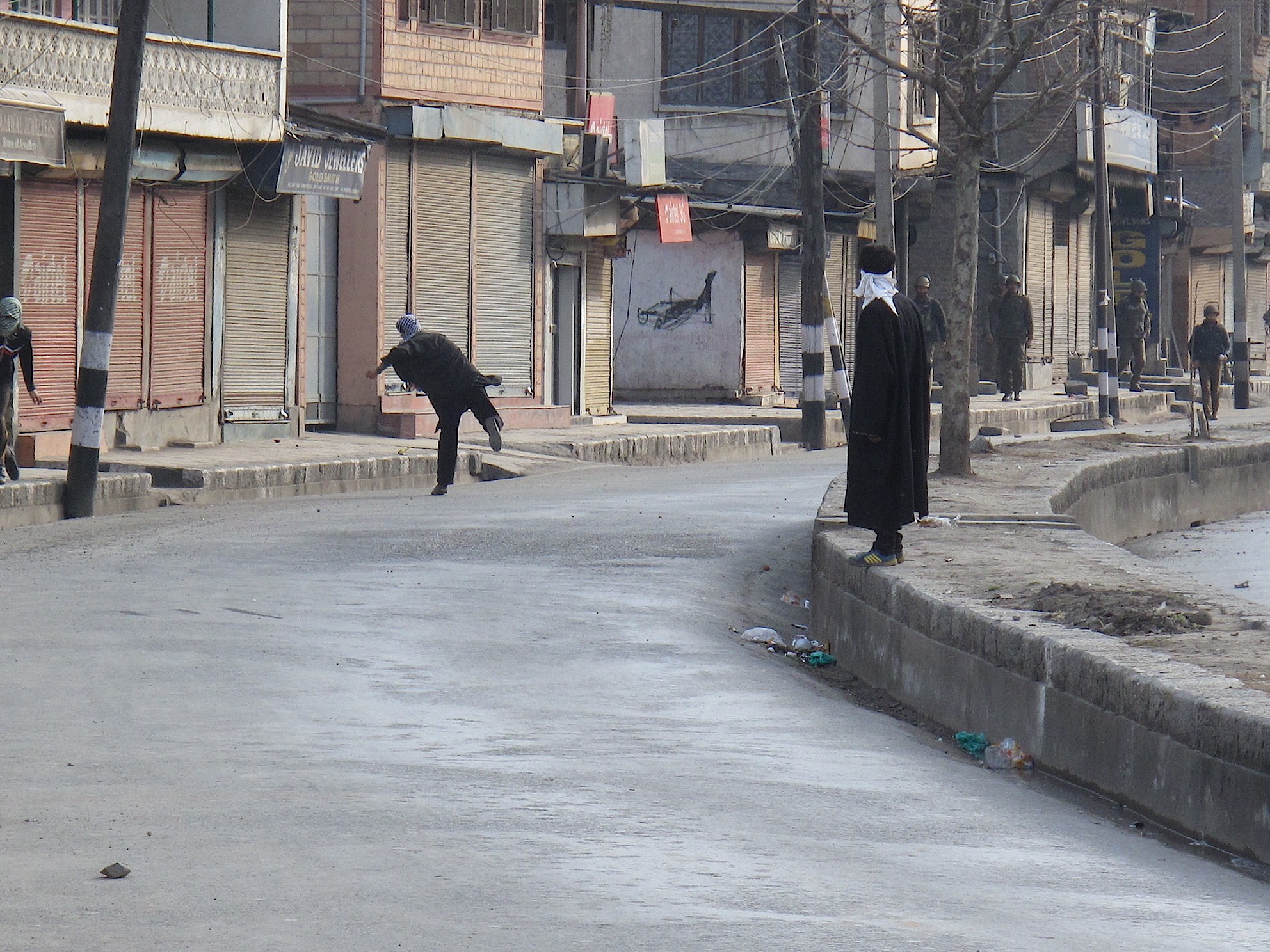
In this Kashmiri Intifada, the police, army and paramilitary use slings, guns, teargas canisters, everything that is available, to suppress rebellion.

It also uses video cameras; it films stone-throwing protesters and then it detains them, “disappears” them, and sometimes uses savage torture methods in order to subdue them.
Young men in this neighborhood are routinely detained, and most of them have at least once, been brutalized.
I am photographing empty gas canisters in their hands, always pointing my lenses away from their faces. But kids actually want to pose: they are not afraid, anymore.

Ironically, it is 26th January, the Indian Republic Day.

“We are going later today! To fight them! Come with us!”

They use Arabic words. They point their fingers towards the sky. They are smiling, pretending that they are brave and ready to die, to martyr themselves. But I know that they are scared. I have been in this for many years… I can sense how frightened they are.

They are good kids. They are desperate, cornered, but good.

I promise. I say I will come. Later: as always, I keep my word.
***
A few days later, in New Delhi, in his comfortable, old-fashioned apartment, the great Indian Kashmiri independent documentary film director, Sanjay Kak, talks to me about the Indian colonialism, in both Kashmir and the Northeast.

We both agree that all over the world, there is very little knowledge about the horrors of the occupation of Kashmir, and almost no knowledge at all about the occupation of the Northeast. In unison, the mass media in India and in the West, censors the information about the true nature of oppression, killing, torture and rapes.

It is because India has betrayed BRICS and moved closer and closer to the Empire, towards the West, signing military pacts with it, while spreading market-oriented gospel. Now it can count on having ‘special status’, like Indonesia. No matter what it does, it will easily get away with it!

Mr. Kak also says that these days it is “difficult to compete in the market-place of global sorrow.”

When I mention the involvement of both the United States and Israel in joint exercises with India, in Kashmir, as well as in the training of Indian police and army officers deployed in Kashmir, Sanjay Kak replies:

“When it comes to brutality, Indian forces could actually teach both Israelis and the United States quite a few things.”

A friend of Sanjay Kak, an Indian writer and activist, Arundhati Roy, explained in March 2013, on “Democracy Now”:
“Today Kashmir is the most densely militarized zone in the world. India has something like 700,000 security forces there. And in the ’90s, early ’90s, the fight became—turned into an armed struggle, and since then, More than 70,000 people have died, maybe 100,000 tortured, more than 8000 disappeared. I mean, we all talk a lot about Chile, Pinochet, but these numbers are far greater.”
***
In Kashmir itself, I work closely with “Jammu & Kashmir Coalition of Civil Society” – with both its President, Parvez Imroz, and with Parvaiz Matta, a human rights researcher. Both men became my good friends.

JKCCS actually believes that since the 90’s, More than 70,000 people have lost their lives in Kashmir, mostly civilians. The organization is openly calling what occurs in Kashmir – genocide.

Mr. Parvez Imroz wrote for this essay:

“The army since 1989 has resorted to war crimes as they have been given the legal impunity and seldom have any armed personnel for crimes against humanity have been punished. The militarization in Jammu and Kashmir has affected all aspects of life and unfortunately the Indian media and civil society, with some exceptions, have been also extending the moral and political impunity to the army who they believe are fighting trans-border terrorism. The systematic disappearance, mass graves, torture has been completely ignored by the Indian and international media.”

“In order to suppress the freedom struggle in Jammu and Kashmir, the Indian government has resorted to systematic and institutional repression. More than 700,000 armed forces have been pressed into service to neutralize the armed struggle and to control the people of Jammu and Kashmir who are seeking the right of self-determination which government of India had promised before the United Nations in the 1948 and 1949 resolutions. The repression of the Indian state has been part of their policy. In this lie culpable even the judiciary who as a wing of the State has served the interests of the executive and not the people of Jammu and Kashmir.

“The international institutions and particularly the western civil society and governments after 9/11 and because of Islamophobia and other interests are completely ignoring the situation in Jammu and Kashmir.”

***
In Kashmir, no matter where I go, no matter where I drive, there are constant, powerful reminders of the occupation: from the almost grotesque presence of the military, police and paramilitary forces, to mass graves. Army barracks are lined up along all the major roads. Military and police trucks drive on them in all directions, on all the major and secondary roads. There are countless roadblocks and checkpoints.

But it is not just the direct and brutal force that is bleeding and destroying Kashmir. Parvaiz Matta explains that this enormous Indian security force has managed to infiltrate and divide local society. Spies and snitches have been inserted. Brave resistance fighters were discredited as informers. Resistance movements have been broken, divided, and so have entire communities, even families.
There is great sense of insecurity. Interrogators telephone formerly detained, alleged resistance figures, and tell them: “We will soon get your sister.”

The brutality of the torture here is unimaginable by any standards. I have investigated and reported on countless warzones, all over the world and countless times, I was entrusted with hair-raising stories of  savagery. However, what I learned in Kashmir exceeds the most terrible practices.

In modern history, the cruelty of Indian forces in Kashmir can only be compared to the Indonesian atrocities of 1965 and to its genocide in East Timor, as well as in Papua, or to the brutality of the Rwandese and Ugandan forces in the Democratic Republic of Congo. Or to the Empire’s direct extermination campaign in Indochina.

Not surprisingly, both India and Indonesia are the West’s client states, promoted as examples of ‘democracy’ and ‘tolerance’.

***
“India is deprived, hegemonic and violent”, I am told at the house of Parvez Imroz, outside of Srinagar city.

In the highly traditional Kashmiri custom, several people sit on the floor, legs stretched, old-fashioned heaters placed under the blankets. We are drinking tea.

When it comes to this meeting, I can only identify two men in this essay from the JKCCS, by their real names. The rest are those who are working on behalf of their abused land, but their positions in the international organizations and press agencies would be compromised, were they to go publicly on the record.

They all helped me a lot, guiding me, explaining the situation, supplying me with contacts and information. They were willing to speak on condition of anonymity, and it is clear where their hearts and allegiances were:

“Indians are very moralistic, when it comes to Palestine… Although, even that is changing, after this administration of Prime Minister Modi is moving India closer and closer towards the West. US and Israel here are deeply involved in ‘anti-terrorist training’. Countless military and police officers are receiving their education in the US, European Union, and Israel. Police officers are being flown abroad. The army is performing regular exercises with the US and Israeli forces, mainly in the area of Ladakh, near Pakistan.”

“Ladakh is actually extremely popular among Israelis. 20,000 to 30,000 come here, every year, as tourists, or in some double capacity.”

“The ideas and methods of Israeli settlements are widely used in Kashmir. But they are ‘improved’ here. The Indian state is fine-tuning Israeli policies of apartheid.”

Everybody here agrees that the brutality factor is much higher in Kashmir than in Palestine:

“The brutality of Israeli forces is not hidden: it is all in the open. Every action against the Palestinian people is well documented. Israeli actions are constantly criticized from abroad, even at home. Huge blocks of countries, even the EU, are demanding independence for Palestine. Kashmir is different: our Intifada is hidden from the rest of the world. At least 8,000 of our people have already died. Hundreds of thousands have been tortured. But there is almost total silence coming from abroad.”

The similarities between Palestinian and Kashmiri resistance and their aim for independence and statehood, are striking. One of the most famous films made by my friend Sanjay Kak from New Delhi, is called “Jashn-e-Azadi – How We Celebrate Freedom”, and it is exactly about the topic. Sanjay also edited a book: Until My Freedom Has Come – The New Intifada in Kashmir (2011).

***
Kupwara. Mass graves dot the hill.

When we arrive, the town itself is totally shut down. It is the 21st anniversary of the massacre of local people by Indian forces. Around 27 people were slaughtered here, more than two decades ago, as they demanded the end of the Indian occupation.

“Here, many people were ‘disappeared’; they were killed in so-called staged battles. It happened on several occasions”, explains Parvaiz Matta. “Countless bodies arrived mutilated at the local hospitals: some with no legs, a clear result of torture.”

There are rusting stretchers resting against a tree. I am told that they were used to shuttle bodies from the hospital to this mass grave. And the bodies kept arriving, being carried by security forces from the  forest.

The mass graves are all over the hill, some right next to a public school, which sits at the summit.

“The security forces described the bodies as being those of ‘unidentified foreign terrorists’, I am told. But ‘foreign’ is already a form of identification, isn’t it?”

There are 7000 unmarked and mass graves in Kashmir, I am told…

***
The 700,000-strong security forces are fighting between 200 and 300 active Mujahedin, resistance fighters.

The ‘fighting’ mainly consists of murdering innocent bystanders and villagers in the remote areas. These corpses are then passed off as the corpses of the Mujahedeen, ‘killed in combat’. That consequently ‘justifies’ huge military operations and budgets.

The ‘fighting’ also includes torturing anyone who is suspected or ‘accused’ of belonging to, or supporting the Mujahedeen; therefore anyone whom the security forces decide to identify as such.
The ‘signature’ torture in Kupwara, consists of cutting off legs or fingers. Torture tools and methods here, in this area, which is very near the Pakistani border, are very elaborate.

The chests of victims are burned with red-hot coins, and electric current administered through the penis. The testicles of victims are burned. Bottles of alcohol are inserted into the rectum of men who are then hung upside down from the ceiling. Wooden rollers are used to destroy legs. Nails are hammered into the feet of prisoners. Those who have half-moon tattoos, have them removed by red-hot pliers.

When a woman gets arrested, it is almost certain that her torture will include gang rape.

Sodomizing male prisoners is also common, all over Kashmir.

All of this, of course, could not pass as anything ‘spontaneous’. There is clearly a pattern. The security forces are trained to do what they are doing. A new, extremely brutal group has been created by the state. It is called SOG, and it mainly consists of the children of police and military personnel killed in battles with the Mujahedeen. It is easy to imagine the type of methods it uses.

“Most cases of torture and rape are not documented”, explained Parvaiz. “But my organization alone has already managed to amass documentation on around 5,000 instances of torture. For instance, a father had his head chopped off in front of his horrified family…”

I make him stop, at least for a few minutes. I need to at least have a short time to digest what I see around me, as well as what I am told.

***
We drive further, towards the Pakistani border. It is all really lush here – lush and stunningly beautiful. Tall mountains covered by snowcaps, pristine lakes and meadows. I ask our driver to stop; I need some fresh air. I need to see this magnificence, in order to regain strength, before we proceed towards a place that I dread visiting, but which I have to visit nevertheless.

We are heading towards two villages: Kunan and Poshpora.

Here, on 23rd February 1991, the armed forces of India surrounded Kunan, and arrested all men older than the age of 13. They arrived with the tools of torture, in their vehicles, and the torture that they administered, was horrible.

We park the car and I am lead into one of the houses.

It is a traditional, neat and extremely clean house. We take off our shoes. Two men are already waiting in the main room, resting their backs against the wall and soft pillows. A third man arrives shortly after.

We are not here to discuss torture. It is mass rape I am supposed to hear about.

But first, the men recall their own suffering. One of them begins:

“It was February and it was late at night; cold outside, winter. It all began at 11 PM and did not stop until 4 AM, early in the morning. All the men were taken out, into the bitter cold. They stripped us naked, and forced us to stand in an ice-cold stream. There was snow, 3 feet tall all around. They tortured 100 of us; of the men… 40 to 50 were severely tortured. They used electric current, and also, they put red chilly into the water and forced our heads down into it.”

There are no women in the room; no women at all that could be spotted around the house.

Another old man began speaking, while I averted my eyes. It was all extremely uncomfortable, and I knew what a great effort and determination it took for these men to speak about that horrible night, almost a quarter of century ago.

“Women and girls were left in the houses. They were alone and defenseless. The soldiers, around 200 of them, entered the houses, mostly 5-10 per house. They were carrying bottles of alcohol with them – they were drunk. It was all planned like this!”

Now the men spoke over each other:

“Women were raped. All of them… And not only women, but also small girls, from 6 to 13 years of age… Their clothes were torn off, they were insulted, humiliated, then raped.”

Soldiers were screaming at women: ‘You are bloody helping the militants, aren’t you?’

And this was done by Indian troops, and in India, so often; even rape does not end with the act itself. The brutality of the act is regularly indescribable; it includes the insertion of sharp objects, of rusty bars, of anything.

“Many of our women bled profusely. Some were unconscious for 4 or 5 days,” these 3 husbands whose wives survived that terrible night told me.

“One of the women delivered a baby, just 4 days earlier. The baby was hugging her mom when the soldiers entered. They first killed the baby, then gang-raped the mother.”

“They tortured and raped a minor, a girl. They broke her leg. She died later…”

“Some women have undergone treatment for many years, as their rectums were severely damaged”.
5 women died as a result of what took place that night.

There were two cops, from the village, who tried to assist the injured women. Later, they were willing to come forward and to testify. One of them was shot dead – murdered.

I am told that 40 women came forward and gave testimonies. These were married women. Minor, unmarried girls, had kept their identity secret. But even so, almost no young woman from Kunan could get married, afterwards. The stigma was too great and no villager from the area wanted to marry a rape victim.

Parvaiz explained that the rapes are still taking place in the deep provinces, in the frontier areas, where the people are at the mercy of the military. “Still, rape is used as a weapon of war”, he said.
For the Kunan onslaught, not one soldier has been punished, so far.

Before we left, the husbands of the rape victims, explained:

“This happened at the beginning… Then many other, terrible events took place. We tried to play by the rules, using the Indian legal system. But after almost a quarter of a century, there has been no justice. Here, the law only protects those guilty ones. This militarization of Kashmir ruined our lives! Now, we just want to be freed by destiny! This was all a terrible trauma for us. Even children from other villages are mocking our women and girls: “Oh, you come from that village where all the women were raped!”

It was a humbling experience, facing those tough Kashmiri men, who decided to open themselves up to me.

After they spoke, we walked from Kunan to Poshpora Village. Metaphorically, the ice was broken. I was allowed to photograph villagers, both men and women. I was accepted.

As we began driving towards Srinagar, there was a long silence inside the car. Then I broke it:
“Parvaiz?”

“Hmmm?”

“The fact that they mock the girls and women…” I began…

I knew he was thinking the same.

“Would you marry a rape victim?” He asked.

“If I were to be in love with her, yes, of course I would.”

“Are you sure?”

“Yes,” I said.

“This is where our culture has failed”, he said. And this is when I knew, that he would do the same.
I told him about the mass rape in the city of Ermera, in East Timor. The Indonesian forces did it – exactly the same scenario as in the Kashmiri village of Kunan.

I was then working illegally in East Timor. I was detained and tortured. Nobody ever got punished for the rape or for the killings. Many people directly responsible for the genocide in East Timor are now governing Indonesia.
***

As we passed Kupwara, the mood in the car significantly improved.

“I did not want to tell you, but chances were that before reaching Kupwara, we could have been stopped, interrogated and then…”

I got the point.

But now ‘it was fine’.

The further we drove away from Kupwara, the safer it was getting; by now we would have many arguments for justifying our trip. I photographed a few military and paramilitary camps, through the windshield.

Then I asked our driver to stop. I needed to take a piss. He pushed the brakes right next to some beautiful Kashmiri apple orchard.

I stepped out from the car and walked towards the first tree; the fresh air and beautiful countryside, and stuff like that… Then I spotted him: a soldier, semi-camouflaged, holding his machinegun, ready. I pissed towards him, defiantly. Then I saluted him, mockingly. He did not even smile, just stood there, like an idiot, under the apple tree.

I was wondering whether there are more Indian security personnel in Kashmir, or apple trees?

***
I visited Mr. Hassan Bhat in Sopore City, known for its resistance fighters.

Mr. Bhat used to be one of them, but he was captured and tortured savagely, on several occasions, and he gave up on active duty.

The security forces killed both his sons. Just like that, both died by the time they reached the age of 15.

One son had gone to a local store, in 2006, to buy milk, and a security agent shot him through the chest, from his speeding police car. Another boy died in 2010, when some kids got engaged in stone-throwing, and he was caught in the middle of it, when he got scared, and jumped into the river. Police began shooting tear gas canisters at anyone who was in the water. They hit him with one of those, and he died.

“I know the perpetrators, I know the officer who was in charge”, said Mr. Bhat. He tried to file a complaint, but the police refused to register the case.

“The officer-in-charge was going to join the UN Peacekeepers”, said Parvaiz. “India often sends people who fought in Kashmir, to the UN. It is a huge money-making scheme for the country… But my organization identified him, and supplied the UN with detailed evidence on his crimes. After that, his application got rejected.”

I actually saw the Indian UN “Peacekeepers” in action, in Goma, in the Democratic Republic of Congo, where even the former UNHCR head, Ms. Masako Yonekawa, complained to me about the many illegal activities perpetrated by the Indian ‘peacekeeping contingent’.

Then, Mr. Bhat and I stood by the shore of the River Jhelum.

“It flows all the way to Pakistan,” he sighed.

Mr. Bhat, despite all those horrors that he has survived, is a kind, gentle man.

I asked him whether he thinks that Kashmir will be able to, at some point, gain its independence.

“80% of Kashmiri people want freedom”, he said. “80% is a lot of people, don’t you think?”

I am being shown where, in 1993, an entire area had been destroyed, by the BSF (Border Security Forces). Back then, 53 people died.

Later we go, in the middle of the night, to a house where a battle took place between the Indian forces and the Mujahedeen, just a few days earlier.

Sopore is still fighting.

But there is fear. It is cold; it is an omnipresent fear.

I am told by many, that now, people are afraid of even protesting against the scarcity of basic supplies. One could easily disappear.

I am told that here, the Indian forces are trying to hook young people on alcohol and drugs, in order to keep them away from the resistance.

But others say: in this city, in Sopore, people are determined. They resist. They are active here. This city produces big people! People that never surrender! Indian forces call it “Little Pakistan”.

Can the huge oppressive force really be defeated, and if yes, then how?

This is when, even in Sopore; even in the middle of the night, in front of a house that recently witnessed a real battle, everyone gets realistic:

“Only international pressure can help!”

***
At some point, one gets exhausted, almost numb, after listening to detailed and well-documented accounts of extra-judicial killings, disappearances, torture and rapes.

At one point I was presented with evidence about a man who was detained, questioned and when he appeared defiant, both of his feet were chopped off. He survived. When still in detention, sometime later, the security forces cut off substantial parts of his flesh, from different parts of his body; cooked it, and forced him to eat it, for several days. He survived… The case is documented and HR organizations are demanding justice. No one has been punished.

***
There is genocide: terrible, outrageous and unreported by the cowardly media and the intellectuals, in both India and the West.

People, who dare to speak and write about the plight of Kashmir, are intimidated, deported, and even physically attacked.

Arundhati Roy is periodically threatened with sedition charges, lawsuits and life imprisonment.
Others, like the legendary radio host David Barsamian, got deported from India, no explanation given.

In October 2011, a senior Supreme Court advocate Mr. Prashant Bhushan (who drafted the Lokpal Bill), was brutally beaten in his chambers at the Supreme Court after he made comments on Kashmir. Mr. Bhushan’s spoke on human rights violations and militarization in Kashmir.

***
There are tourists in Kashmir, not only Indian, but foreigners as well. They go skiing and snowboarding in Gulmarg, or hiking to Ladakh. There are Europeans and Israelis, some North Americans.

Many locals call it “horror tourism in Rapistan”.

I encountered several couples, high in the mountains, in Gulmarg: red cheeks from too much fresh air at the high altitude. I talked to a British couple enjoying skiing, a German couple on vacation… They had no clue about what was happening in Kashmir. When I pressed them a bit: “But you must have noticed all those bunkers, military convoys and checkpoints”, their simple reply was: “Yes… Well, India has to do something about the terrorism problem, right?”

It is a well-documented fact that the Empire is counting on several countries, all over the world, for acting on its behalf, spreading terror in the ‘neighborhood’, often brutalizing even its own people. These countries are, for instance, Rwanda, Uganda and Kenya in Africa, Honduras and Columbia in Latin America, Israel, Saudi Arabia and Qatar in the Middle East, Indonesia, Thailand and now India in Southern Asia.

Most of the brutal lackey states are christened as ‘democracies’, as tolerant, as the examples worth following.

These countries are promoted as ‘Lands of Smiles’, or as ‘cultures of non-violence’. It is all farcical, but somehow, not many people seem to be laughing.

It is because they don’t know. It is because brutality and cynicism still pays.

And this approach should stop! Brutal crimes against humanity have to be exposed. Countries that are murdering thousands of innocent people have to be shamed publicly and dealt with, internationally. It goes without saying that a state that is serving the Empire, torturing and raping those who are longing for independence, while in the same time spitting on its own poor, should never have place in an organization like BRICS!
***
I went back to the area of the Grand Mosque in Srinagar, on 26th January, as I promised. I followed the kids. A few streets away, after 2 PM, fighting erupted.

It was all raw and tough, and it clearly resembled Palestine.

The only great difference was that other than me there were no witnesses, to describe the courage of local youth, as well as the oppression of the Kashmiri people by the Indian state.

Two days later I took the longest cable car in Asia, at Gulmarg. I wanted to see ‘what was up there’. There is, of course, a military base!

On the way down, the electricity collapsed and our gondola froze, suspended in midair. The door would not close, and there were holes, all over. It was India, after all. I could have frozen to death, if the stuff did not begin moving a few minutes later.

India is facing some of the most serious challenges on Earth: from illiteracy to deep poverty. 700,000 security forces cost billions of dollars, annually, pragmatically speaking. Even if the Indian elites, government and military do not care about the Kashmiri people and their plight, they should care at least about their own poor!

Holding Kashmir against its will brings no benefits to India and its people. It is definitely undemocratic and brutal… and absolutely unnecessary!

***
Welcome to Kashmir! Its beauty is fabled. Its lakes, mountain ranges, deep valleys and rivers are proud and striking. Its people warm, welcoming, but strong.

Kashmir is bleeding. Its valleys are divided by barbed wire. Its women are raped. Its men tortured and humiliated. The cries of Kashmiri people are muted. The world knows almost nothing about their plight, about their suffering.

700,000-man security force fighting around 300 men! And they cannot win. Why? The answer is simple: It is because no brutal force on earth could ever defeat those who are fighting for the survival of their land, for something so dear, so beloved!

kids ready to fight
Kashmir intifada
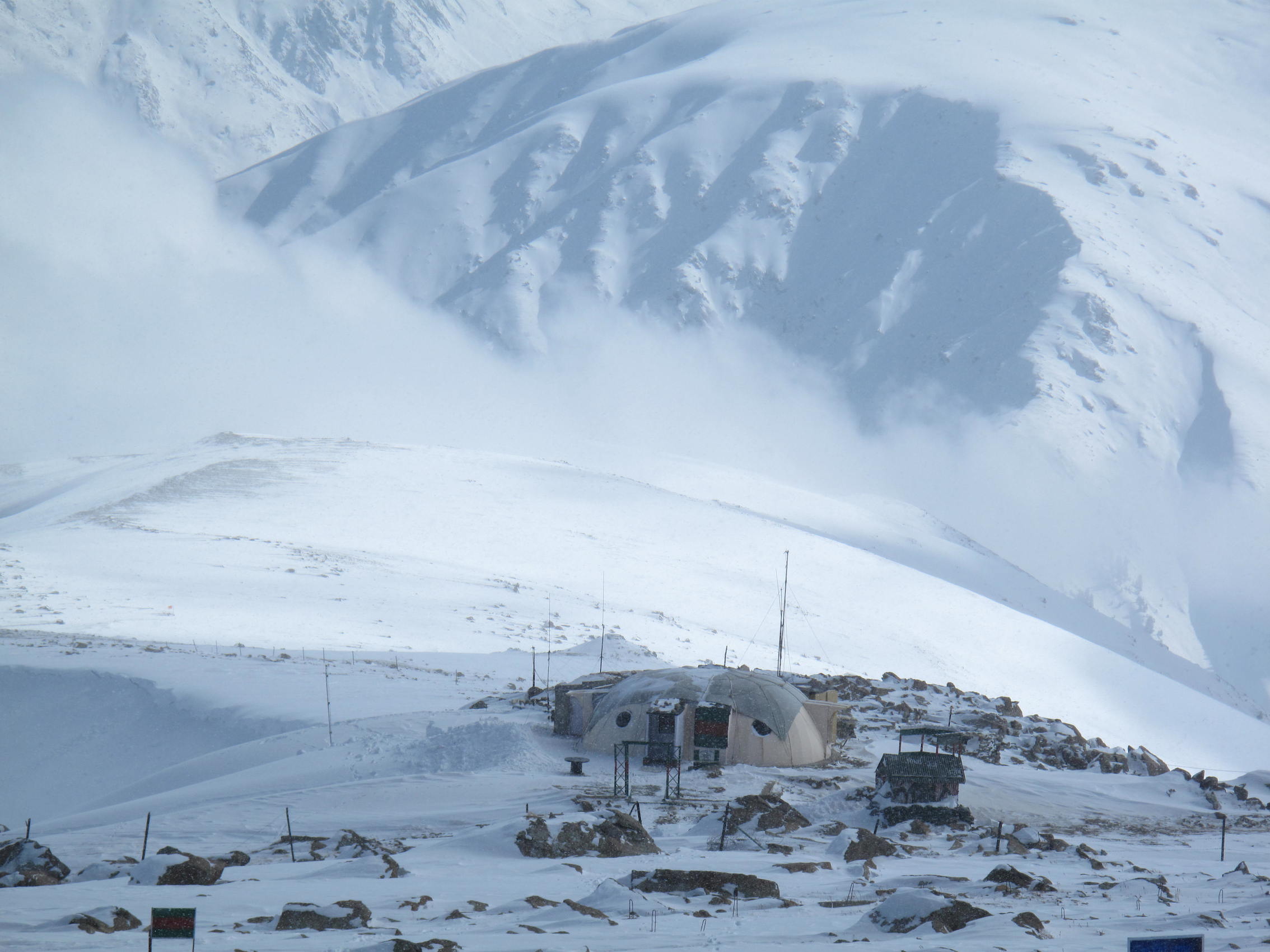
even at the top - another base
his 2 sons were killed
husbands of rape victims in the village of Kunan
village of Kunan

Andre Vltchek is a novelist, filmmaker and investigative journalist. He covered wars and conflicts in dozens of countries. His critically acclaimed political revolutionary novel Point of No Return is now re-edited and available. Oceania is his book on Western imperialism in South Pacific. His provocative book about post-Suharto Indonesia and market-fundamentalist model is called “Indonesia – The Archipelago of Fear” (Pluto). He just completed feature documentary “Rwanda Gambit” about Rwandan history and the plunder of DR Congo. After living for many years in Latin America and Oceania, Vltchek presently resides and works in East Asia and Africa. He can be reached through his website.

Tuesday, February 10, 2015

Spooky statecraft

By Aasim Zafar Khan

 Amidst all the grief in the aftermath of the horrific attack at the Army Public School in Peshawar, there has been one question on everybody’s lips: When is Fazlullah going to be killed?

And each time the COAS or the DG ISI have made a trip to Kabul, the rumour mills have been busily spinning their yarn: He’s gone to share details on Fazlullah’s whereabouts; it’s only a matter of time now; he’s told the Afghans: you take care of him or we’ll have to come in and do it ourselves.

But Fazlullah’s still alive and probably plotting another horrific crime. Yes, one of the visits of the top brass revolved around sharing incriminating evidence, but all we have so far is that the planners of the attacks have been apprehended.

Obviously, this is not enough.

Do we not have the capability of taking this one person out? Do we not have any actionable intelligence? The answer to both questions is: yes, we do. But it would be naive to assume that just because we have the intel and the capability, there are no other obstacles in the way. After all, this is spooky statecraft.

We live in a Machiavellian world – the truth is mostly impossible to unearth, hidden by layers upon layers of lies and deceit. It is correct that evidence on the whereabouts of enemy number one was shared with officials across the border. But what happened next?

Sources privy to the interactions in Kabul suggest that a dossier was thrown our way as well – a dossier spilling over with evidence of violence in Afghanistan planned and operated within our borders. We were adamant – for something, anything. And shortly after the spate of visits, the Afghans launched an operation in the eastern province of Kunar where, intel suggests, Fazlullah was holed up. And soon enough, five people were arrested for involvement in the horrific Peshawar attack.

The truth is that, while an operation has indeed been launched in Kunar, the government in Kabul does not exert much control or influence in the outwardly provinces of Nuristan, Kunar, Paktika and the like. And if one is to believe what one is hearing, Fazlullah and his cronies roam between these provinces with ease and freedom. However, as we Pakistanis know very well, where this is an absence of control and governance, the only institutions that can operate are intelligence agencies. And not only your own. Take for example, the vast network of CIA operatives that continue to roam across Pakistan, and using their fixers in the tribal regions, plant little blue homing chips on future drone strike targets. That’s how it goes.

In the same vein, the National Directorate of Security (NDS), the Afghan equivalent of the ISI, operates in these restive and far-flung regions. And let me take you back to the episode of one Latif Mehsud. This fellow was nabbed by US Special Forces as he made his way to a meeting with the NDS. And while the Afghans described Mehsud as an ‘insurgent peace emissary’, as reported by the New York Times,” according to Afghan officials, the ultimate plan was to take revenge on the Pakistani military”.

Another reason to accept that the Afghans perhaps don’t have too much control is that we also approached both the United States and the International Security Assistance Force (Isaf) for help in getting Fazlullah.

While this is most disturbing, one cannot be surprised by such behaviour – like I said, this is spooky statecraft. But all this went down during former president Karzai’s tenure, and we are all well-versed in his dislike for Pakistan. It is pertinent to mention here that for the longest time Pakistan has held a senior Afghan Taliban member by the name of Abdul Ghani Baradar, a man long sought by the Karzai government to add a much needed impetus into peace negotiations with the Taliban.

Now President Ghani is in charge, and the real questions to ask are: is the Afghan president’s fresh start with Pakistan something unanimous or just something that he alone desires; and b) What kind of control does the government in Kabul have on the NDS?

The NDS and, by association, the Afghan government have long sought the ability to have some kind of negotiating leverage against Pakistan. The attempt to collude with Latif Mehsud is a prime example, and now, Mullah Fazlullah.

This is not acceptable. The Afghan president must rein in his intelligence agency, which it seems increasingly likely is allowing refuge to Fazlullah. Or, really, why can’t we do it ourselves?

Another aspect of spooky statecraft: Cross-border assassinations are part and parcel of how intelligence agencies take care of business. The CIA and Mossad are some of the best exponents of this part. Perhaps it’s time we start dabbling in this dark art ourselves.

Postscript: One usually does not believe in rumours, but sometimes they tend to make sense. Under the overused Machiavellian rule of the enemy’s enemy is your friend, reports suggest that one foreign intelligence agency is also playing its part in protecting Fazlullah.

Email: aasimzk@gmail.com

Twitter: @aasimzkhan

Monday, February 9, 2015

ISI Key Khilaf Bharti Shar-angez Propaganda Mohem آئی ایس آئی کیخلاف بھارتی شرانگیز پراپیگنڈا مہم

بھارت میں آرایس ایس اوردیگر انتہاءپسند ہندو گروپوں سے تعلق رکھنے والوں نے مسلسل پاکستان اورپاکستان کی نمبر ون انٹیلی جنس ایجنسی آ ئی ایس آئی کیخلاف منفی پراپیگنڈا مہم جاری وساری رکھی ہوئی ہے۔ بیمار ذہنیت رکھنے والے یہ بھارتی میڈیا اینکرزلکھاری منفی پراپیگنڈا ے کے ذریعے گھٹیا قسم کے نفسیاتی آپریشن کی تکمیل کر کے پاکستانی مفادات کو نقصان پہچانا چاہتے ہیں ۔ بھارت کے پاکستان دشمن عزائم کی راہ میں سب سے بڑی رکارٹ پاکستان کی موثر ترین دفاعی لائن آ ئی ایس آئی ہے۔ جولائی2013 میں بھارتی میڈیا نے انڈین انٹیلی بیورو کی فیڈنگ کے تحت آ ئی ایس آئی کے خلاف یہ شرمناک الزام لگا یاکہ آ ئی ایس آئی دہشت گردانہ نیٹ ورک کو متحرک کر کے بھارت میں متعدد ہندو لیڈروں اور بہت سارے شہروں میںانکی تنصیبات کو نشانہ بنائے گی۔ بھارتی حکومت نے سیکورٹی انتظامات کو ہائی الرٹ رکھا کیونکہ آرایس ایس کے چیف موہن بھاگوات کئی بھارتی ریاستوںکا دورہ کررہے تھے  تا ہم تمام کہانی جو آ ئی ایس آئی کو بدنام کرنے کے لیے ممکنہ دہشت گردانہ نیٹ ورک سے متعلق گھڑی گئی بے بنیاد اور شرانگیزثابت ہوئی ہے۔ پاکستان نے بھارتی منفی پراپیگنڈا ے اور شرانگیزی کو نظرانداز کرتے ہوئے تجویز کیا کہ اس طرح کےبے بنیادالزامات بھارت اور پاکستان کے درمیان امن عمل کو تباہ کر سکتے ہیں لیکن بھارتی پراپیگنڈا ہ کاروں نے کوئی سبق حاصل نہیں کیا اور پاکستانی مشورے کو نظرانداز کر دیا حال ہی میں Deccan Chronicle نے اسطرح کی ایک طرح کی ایک من گھڑت اور شرانگیزکہانی بعنوان پاکستانی آ ئی ایس آئی بھارتی اقتصادی مراکز اور اہم تنصیبات کو نشانہ بنا سکتی ہے۔7نومبر 2014 کو نمر تابی جی آہو جا کی رپورٹ کے مطابق کے نئے دہشت گردانہ موڈول جسے آئی ایس آئی نے تربیت فراہم کی ہے بھارت میں داخل ہو گیا ہے جوکہ بھارتی اقتصادی تنصیبات بشمول رزیو و بنک، بمبئی سٹاک ایکسچینج ، نیو دلی تہاڑ جیل، بنگلور بی ایس ایف ہیڈکوارٹر جلندر، پٹیالہ جیل پنجاب اور نیو آوانتی پورہ جموں کشمیر کو نشانہ بنا سکتے ہیں۔ بھارتی انٹیلیجنس بیورو نے یہ اطلاع بھی بھارتی قانون نافذ کرنے والے اداروں کو دی کہ دہشت گرد گروپ بھارت میں راجستھان بارڈر کے ذریعے داخل ہو ا ہے جو کہ پونے کی پونے کی طرف بڑھ رہا ہے ۔ جنہیں لوکل سلیپرسل سے اسلحہ اور ایمونیشن فراہم کیا جائےگا۔’بھارتی را “کی ایما پر کام کرنے والے صحافیوں اور لکھاریوں کی طرف سے اس طرح کی میڈیا رپورٹوں میں نہ صرف پاکستان اور آئی ایس آئی پر انتہائی خطرناک الزامات لگائے گئے ہیں کہ پاکستان اور آئی ایس آئی دہشت گردوں کو تربیت دے کر بھارتی اہداف کو نشانہ بنانے کے لئے بھیج رہے ہیں ۔ اسی طرح کی رپورٹوں کا مقصد پاکستان کے امیج اور آئی ایس آئی کے وقار کو نقصان پہنچانا ہے۔ ان تمام بے بنیاد رپورٹوں سے جہاں لکھنے والوں کی بیمار ذہنیت ظاہر ہو جاتی ہے وہاں را کے میڈیا ونگ سے تعلق رکھنے والے لکھاریوں کے آئی ایس آئی کے خلاف مظامین پاکستان اور آئی ایس آئی کے متعلق بھارتی مذموم مقاصد کو بے نقاب کر رہے ہیں۔
جہاں کہیں بھی بھارت میں دہشت گردی کا کوئی واقعہ رونما ہوتا ہے تو فوری طور پر بھارتی “را” اور انڈین میڈیا پاکستان اور آئی ایس آئی پر بغیر تحقیق کئے دہشت گردانہ اقدامات کی سرپرستی کا الزام لگادیتے ہیں۔ بار بار پاکستان اور آئی ایس آئی کے خلاف بے بنیاد اور شر انگیز رپورٹوں کے بعد اب خدشہ یہ ہے کہ بھارتی را خود ہی اپنے ملک میں دہشت گردانہ کاروائی کرکے اور اس کا الزام خود کو سچ ثابت کرنے کے لئے آئی ایس آئی پر نہ لگا دے ضرورت اس بات کی ہے کہ پاکستان فاٹا اور بلوچستان میں عدم استحکام کی بھارتی کوششوں اور تخریب کاری کو کھل کر بے نقاب کرے افغانستان میں بھارتی قونصلیٹ تحریک طالبان پاکستان اور بلوچ علیحدگی پسندوں کو سرمایہ اسلحہ اور تربیت فراہم کر رہے ہیں۔ صرف یہی نہیں بلکہ تحریک طالبان پاکستان کے کچھ گروپوں جو کہ داعش کی طرف رجحان رکھتے ہیں کو متحد رکھنے کے لئے بھارت اپنی چالیں چل رہا ہے۔ تاہم آپریشن ضرب عضب کامیابی سے جاری ہے جس کے نتیجے میں اس کی دال نہیں گل سکتی اسی مقصد کے لئے آئی ایس آئی اور پاکستان کو دباو میں رکھنے کے لئے بھارتی را کچھ بھی کرسکتی ہے۔ تاہم پاکستانی میڈیا کو پاکستانیت کا حق ادا کرتے ہوئے بھارتی “را” اور ان کے لئے پالک صحافیوں اور لکھاریوں کے شر انگیز مضامین اور رپورٹوں کا بھر پور جواب دینا چاہئے۔

India’s clandestine wars against Pakistan

Dr Muhammad Khan
Email: drmk@yahoo.com

If there was still any doubt about Indian involvement in the terrorist and separatists related activities in Pakistan, the video revelations of the Indian National Security Advisor, Mr Ajit Doval, has clarified all those, which India undertakes through its clandestine wars ever since. Mr Ajit Doval is a former spy master and has clearly outlined the Indian strategy, as how to destabilize Pakistan internally through the promotion of terrorism and separatism and making use of Afghan geo-politics.

In his lecture, Ajit Doval, clearly declared Pakistan as the ‘enemy’ “extols Indian intelligence’s ability to compromise and infiltrate the Kashmir insurgency; crows about the beheading of Pakistani soldiers by the TTP and advocates a policy of ‘defensive offense’ against Pakistan.” Although, India has been destabilizing all regional states through its well planned and deliberated strategy, however, its major focus has always been towards Pakistan, a policy of undoing Pakistan.

Mr Doval in his recent lecture clearly threatened that; Pakistan will lose Balochistan, if there is another Mumbai type attack. Though, he did make a mention of the relationship between Mumbai type attacks and losing ofBalochistan, yet the video is a clear confession by India that, it (India) is behind the separatists in the province of Balochistan and has a huge network operative against the state of Pakistan. The tone Mr Ajit Doval used is indicative of the fact that, India must have presence of its operatives physically present in isolated areas of the Balochistan province or in the vicinities of the province.

Indeed, in the past, New Delhi has been promoting sub-nationalism in Sind, Khyber Paktunkhwa, Balochistan and even among the Karachiates (Mohajirs). Indian covert and overt activities in former East Pakistan finally led to the Indian military aggression against the state of Pakistan and resulted into the disintegration of the world’s largest Islamic state in 1971. Though not geographically contiguous, yet, India has been promoting its clandestine activities by making use of the soil of neighbouring states of Pakistan.

In this regard, Brahamdagh Bugti has been active and remained in India for quite some time. He has been frequently travelling between Kabul and New Delhi in last one decade. India has been funding and sponsoring his activities against the state of Pakistan. Indeed, India is financing all the anti-Pakistan sub-nationalist organizations, especially in Balochistan and TTP and its related terrorist network.

In the wake of Operation Zarb-a-Azb, Pak Army destroyed the terrorists’ network in North Waziristan and adjoining areas. This was a major breakthrough against the TTP and terrorism in Pakistan, as the terrorist lost their headquarters and hub of terrorism. Besides, there have been over 3000 intelligence based operations against the terrorists throughout in Pakistan.

Indeed, during these military operations, Pak Army has broken the backbone of the terrorists. These Pakistani successes against the terrorism created a dilemma for the New Delhi, which felt that its strategy is failing. This was a great setback for Indian spying network, its leadership and strategists; they in fact felt crumbling of Indian strategy against Pakistan.

Now India under the premiership of Modi modified its strategy and in the first instance opened firing all along the LoC and working boundary, causing losses of lives and property of innocent people. Pakistan cannot target civilians on the other side of the LoC, however, it retaliates against the identified Indian posts. Besides, a frustrated India has started massive reinforcement of the terrorists in the form of weaponry and finances. People like Mulllah Fazullah are on the payroll of the RAW and NDS, thus still sponsor terrorists acts like Peshawar APS attack and many others. Recently India has also planned Mumbai type attack, where its Navy destroyed a boat, and later blamed Pakistan.
While India has been doing this all against the state of Pakistan, there has been no worthwhile response from Pakistan, at the level of Foreign Office, except issuing reactionary statements in its self defense. However, its military has been raising its concerns in low tone over the Indian involvement in the terrorism against Pakistan. Diplomatically, there has been no or less homework done by our FO and diplomatic missions all around, therefore, international community could not be taken on board about the clandestine acts of India in Pakistan. On the other hand, India has been accusing Pakistan for those acts, which it planned and executed on its own soil to defame Pakistan and taken onboard the international community.

In order to defeat the terrorists’ network of TTP, Pakistan will have to defeat India’s secret wars against it. However, with Modi as Prime minister and Doval as his NSA, one cannot expect a positive change. India has already closed all the doors of negotiations with Pakistan. However, for the Govt of Pakistan, it is high time to reassess its policies and priorities. Indian bullying cannot be responded with compassion and compulsion. There is a strong need that, Pakistan must mobilize its diplomatic community and media to unveil, what all India is doing against the state of Pakistan. Indian covert and overt involvement, as clear from the lecture of Mr Ajit Doval, should be highlighted and international community should be informed accordingly. While diplomacy must play its role, Pak Army must continue its anti-terror operations against the terrorists and Indian sponsored separatists. The people of Pakistan fully support the 21st Amendment in the Constitution of Pakistan. The amendment will enable Pak Army to root-out the terrorism from Pakistani soil. By all means, Pakistan has to counter the Indian secret wars against the state of Pakistan; otherwise the very survival of the state is at stake.

Tuesday, January 27, 2015

India orchestrated Boat Drama to Defame Pakistan


By Sajjad Shaukat


Renowned thinkers, Hobbes, Machiavelli and Morgenthau opine that sometimes, rulers act upon immoral activities like deceit, fraud and falsehood to fulfill their countries’ selfish aims. But such a sinister politics was replaced by new trends such as fair-dealings, reconciliation and economic development. Regrettably, India is still following past politics in modern era.

In this regard, Indian agencies orchestrated a drama to defame Pakistan in the world. On December 31, 2014, Indian media allegedly reported that a Pakistani fishing boat as a Pakistan-based group Lashkar-e-Taiba (LeT) was intercepted by Indian Coast Guards, some 356 km. off the coast of Porebandar, Gujarat. As per Indian Coast Guard IG, K R Nautiyal, an operation was undertaken on a precise intelligence tip and boat was ordered to stop, but it did not comply and sped away. However, having failed to evade Indian Coast Guard, the crew set the boat on fire and it exploded. Indian Coast Guard officials stated that no body or debris was found due to bad weather. Moreover, it was also stated that search is on for another boat which they fear was in communication with the capsized boat.

The Pakistani media said that the Indian media was playing up the incident without establishing proper links to terrorism. The incident was strongly rejected by Pakistan’s Foreign Office Spokesperson Tasnim Aslam, terming it as mere propaganda aimed at tarnishing Pakistan’s image. She elaborated, “Pakistan expects India to conduct a transparent probe to ascertain the facts of the boat incident, while highlighting that its own investigation has shown that there was no sound evidence to substantiate India’s assertions. On the so called terror boat incident, India has not approached Pakistan through diplomatic channels.”

However, the boat incident has stirred a controversy within India itself. Indian National Congress has stated that it has doubts on government’s version of Porebandar incident. The BJP in response has stated that Congress is lending credence to Pakistani stance. In this context, hitting at Congress, BJP President Amit Shah asked the opposition party, whether it was fighting elections in India or Pakistan.

It is notable that 48 hours after the incident, the Indian officials have started portraying another version by suggesting that the boat which had left Keti Bandar, Karachi might have belonged to small time smugglers.

And, it is not possible that 30 HP boat could run four state of the art Indian Coast Guard ships. The media clips show only fire damage to the boat, whereas, in case of an explosion, as suggested by the Indians, complete boat which was small in size, would have torn to pieces.

Indian officials said that wreckage and dead bodies could not be recovered due to bad weather, whereas, open source met data forecasted fair weather. The argument is supplemented by the fact that small boats do not operate in deep open waters unless weather is clear.

Meanwhile, despite the insistence of Islamabad, still, no solid proof was provided by Indian authorities about the incident, and no inquiry reports was shared with local and international media. Hence, Pakistan should launch strong diplomatic protest at UNO, demanding impartial inquiry which could expose Indian fabricated story regarding the Boat episode.

Nevertheless, we cannot see the event in isolation. The aim of this stereotype Indian orchestrated Boat drama is to create an aura against Pakistan prior to US President Barrack Obama’s visit (25-27 Jan. 2015) to India and put pressure on Pakistan government on Zakiur Rehman Lakhvi’s bail issue and allege LeT as an organization, posing regional threats. Prior to Obama’s visit, Indian propaganda seems to be part of overall plan to malign Pakistan of sponsoring terrorist activities in India. New Delhi, for the last few months, is propagating conduct of terrorist activities by LeT inside India.

India has also been projecting the possibility of a terrorist attack coinciding with Obama’s visit or targeting the dignitary. In this regard, Indian secret agency, RAW, Intelligence Bureau and other intelligence agencies have been issuing threat alert almost on daily basis. The issuance of such alerts by New Delhi reflect the concerns of the US and the West regarding the prevailing law and order and security situation in India—being deteriorated by the Hindu terrorism which has been encouraged by BJP hardliner Narendra Modi who got a land sliding triumph in the Indian elections 2014 and has become the prime minister of India. Hindu majority was mobilized on anti-Pakistan and anti-Muslim slogans. Therefore, he is fulfilling the agenda of Hinduvta (Hindu nationalism).

In fact, Hindu politics and culture are dominated by the fundamentalist parties such as BJP, RSS, VHP, Shiv Sena and other similar groups which have been propagating Hindutva. Provocative utterances of their extremist leaders have resulted into unending violence against the Muslim and Christians including other minority groups, while, India is also facing insurgency and terrorism in its various regions.

It is mentionable that on January 20, 2013, Indian External Affairs Minister Salman Khurshid and Home minister Sushil Kumar Shinde confessed the nexus between BJP and the RSS, disclosing that organized training camps run by these fundamentalist parties were promoting Hindu terrorism. They also disclosed that these parties were behind the Samjhauta Express, Meccca Masjid and Malegaon blasts including Gujarat and Babri Masjid incidents. Earlier, New Delhi was accusing Pakistan’s primary intelligence agency, ISI for blasts in Malegaon and other cities.

It is also noteworthy that on July 19, 2013, the Indian former home ministry and ex-investigating officer Satish Verma revealed that terror-attacks in Mumbai in November 26, 2008 and assault on Indian Parliament in January 12, 2001 were carried out by the Indian government to strengthen anti-terrorism laws. But, Indian top officials and media had blamed Islamabad and LeT for those attacks.

Therefore, as part of anti-Muslim and anti-Pakistan move, BJP-led government which is continuously manipulating the double standard of the US-led Western countries in relation to New Delhi and Islamabad has orchestrated the boat drama to defame Pakistan prior to Obama’s Indian visit.

Thursday, January 15, 2015

Does ISIS Exist in Pakistan?


Recently, propaganda intensified that the militant outfit Daish or ISIS (Islamic State in Iraq and Syria) has its presence in Pakistan. Besides some newspapers and media anchors of some TV channels also misperceived that ISIS has penetrated into Pakistan. In fact, they made their observation on the basis of media announcements by the banned Tehreek-e-Taliban Pakistan (TTP) leaders and Indian media.

Although ISIS does not exist in Pakistan, yet Pakistan government, law-enforcing agencies, media and civil society must exercise high degree of vigilance against any possible ingress by any elements like ISIS. Despite this, existence of ISIS in Pakistan needs special analysis, as its presence can not merely be propagated on the basis of wall chalking or media announcements of the TTP leaders and India.

As regards this militant outfit, on 29 June 2014, ISIS proclaimed a worldwide caliphate by its leader Abu Bakr al-Baghdadi, based in Iraq. It claims religious, political and military authority over all Muslims, while ISIS’s actions have been widely criticized around the world, with many Islamic communities judging the group to be unrepresentative of Islam. One of ISIS’s goals has been to establish a radical Sunni Islamic state in Iraq and the Levant region, which covers Syria, Jordan, Israel, Palestine etc., and southern region of Turkey. It is widely known for its violent propaganda which includes Internet videos of beheadings. The UNO and Amnesty International have held this group responsible for human rights abuses and war crimes. ISIS group has been designated as a terrorist organization by the UNO and the European Union.

Some reports suggest that as part of the double game, American CIA has also been supporting the militants of the ISIS to overthrow the Shia regime of Syrian President Bashar Assad. Another aim is to spread sectarian violence in the Islamic countries.

However, besides some Islamic countries, a majority of the religious extremists from the Western World and especially India has joined the ISIS. In this context, a deliberate oblivion on the part of the West about ISIS recruits from their countries also exposes their duplicity and hypocrisy.

It is notable that although various kinds of terror attacks in Pakistan have been conducted by the TTP and its banned affiliated groups in the past few years, yet the massacre of 132 school children at Army Public School and College in Peshawar on December 16, 2014 proved a watershed, as it has given a final wake up call to the nation to unite against these ruthless terrorists.

In this respect, the armed forces of Pakistan have conducted several successful military operations against the terrorists; the most recent one being operation Zarb-e-Azb, which has successfully broken the backbone of militants. Frustrated by their failures, these insurgents are resorting to coward acts like attack on innocent children in Peshawar.

Taking note of the school attack, Chief of Army Staff Gen. Raheel Sharif has himself started supervising the military action against terrorists, and as part of the operation, several terrorists have been killed during air strikes. Gen. Raheel stated, “We are extremely saddened, but our resolve has taken new height”, and added “We will continue to go after the inhuman beasts, their facilitators till their final elimination.”

Undoubtedly, as a result of ongoing operations in Waziristan and Khyber Agency especially operation Zarb-e-Azb, militants are finding no place other than Afghanistan to flee and save their skin.

In this context, Gen. Raheel accompanied by the DG of Inter-Services Intelligence agency (ISI), rushed to Kabul on December 17, 2014. During his meeting with his Afghan counterpart, President Ashraf Ghani and the ISAF commander, he presented evidence of the Peshawar massacre’s linkage with TTP sanctuaries in Afghan provinces of Kunar and Nuristan. He also asked the extradition of TTP chief Mullah Fazlluah, and handing over to Pakistan. In response, they assured him to take action against the TTP.

In fact, Afghanistan has become a hub of anti-Pakistan activities from where external secret agencies, especially Indian RAW are sending logistic support to Baloch separatist elements and TTP insurgents in Pakistan. Posing themselves as Pakistani Taliban, these enemies have joined TTP and other banned extremist outfits. In the recent years, especially TTP’s insurgents and its affiliated banned groups conducted many terror-activities in various regions of the country like suicide attacks, ruthless beheadings of tribesmen, assaults on security personnel and prominent figures including Shias, Ahmadis, Sufis, Christians and Sikhs as part of the scheme to create chaotic situation in the country.

It is of particular attention that spokesman of the Al-Qaeda in the Indian Subcontinent (AQIS), Usama Mehmood and some other militant groups have also condemned the TTP in relation to the massacre of innocent children at Peshawar school.

Nevertheless, after Peshawar incident, strong public reaction against extremism/terrorism and dislike for Taliban/TTP elements—has been equally condemned by the political leadership as a national policy, showing solidarity with the armed forces. In this connection, on January 2, this year, political and military leaders agreed on a draft of legislative measures which would pave the way for establishment of special military trial courts. The participants also reiterated the commitment for dismantling and destroying all forms of terrorism and terrorist networks operating within the country. It was unanimously resolved that the 20 points enunciated in the All Parties Conference (APC) Resolution of December 24, 2014 shall be acted upon expeditiously—the bill as 22nd (Constitutional) Amendment, will be enforced soon after its approval from the parliament.

Meanwhile, media has reported that an Indian person namely Mehdi Masoor of Banglore remained affiliated with ISIS, and is running a pro-ISIS tweeter account. So question arises as to how India justifies its propaganda of ISIS linkage with Pakistan?  As a matter of fact, New Delhi has been frustrated by the successes achieved against the Taliban/TTP insurgents by Zarb-e-Azb. Therefore, sinister aim of Indian false propaganda about the presence of ISIS in Pakistan is to distort country’s image in the eyes of international community, while ISIS does not exist in Pakistan.

Thursday, January 8, 2015

Mass Conversion to Hinduism In India


By Faheem Belharvi

Bajrang Dal, an offshoot of the Rashtriya Swayamsevak Sangh (RSS) converted at least 57 Muslim families (200 people) into Hindus at a “Purkhon ki Ghar vapsi” coming home of the ancestors ceremony held at Agra, Uttar Pardesh. It is not a first event of its kind. Previously, in early 2014, Christians were forcefully converted to Hinduism which created unrest among Christian Clergy. BJP is trying to portray the event as of wishful conversion, however, since coming of BJP government in the center, RSS and its offshoots have accelerated their efforts for minority conversion into Hinduism. Recently a BJP state minister for Food and Security, Nirangan Jyoti stated that Muslims and Christians are sons of Ram, those who don't believe, should quit India. There was a lot of protest from Muslims and civil society circles to remove the minister but PM Narendra Modi denied her removal. 

There was a proper ceremony who arranged with coded name by the Hindu Pundits. In the ceremony and asked the Muslim to follow the words as spelled by the pundits. This was a high time that Hindus forcefully converted Muslims into the Hinduism. However, Hindus are claiming their religious is peaceful and there is no concept of force in Hinduism to convert the followers of other religious into Hinduism. This ceremony was the question mark on the assertiveness of Hindu Pundits. As they have violated the basic norms of their religion and tried to harm the ideologies other communities. 

Indian government, especially Indian religious ministry could not take any measures to slab the Hindus by taking this big step against the Islam and Muslims.Indian media portrayed this event negatively and made the Muslims responsible of this. Indian media has the view that the converted families were actually belong to Hindus about thirty years back. Indian media had projected that the families were not forcefully converted as they are free to follow any ideology according to their faith and will.   

Definitely, there were certain social factors for conversion of Muslims into Hinduism like poverty and illiteracy. The remote areas of India where Muslims and Hindus are living to gather. Being as the biggest minority in India, most of the Muslim population is living below the poverty line and they could not even meet with basic necessities. The fault is being exploited by the Hindu Pundits and they take the favour from circumstances to convert the Muslims into Hinduism. 

Surprisingly, Indian Muslim community did not display off their reservations and apprehensions on this ceremony and continued their silence. More than 180 million Muslims are living in India. They are dominating in the field of politics, economy, science and other social and professional sectors despite of that they kept silent on the ceremony. Even Muslim community did not launch any strong protest against this heinous act.

The custodian organization that are designed to protect the rights of Muslims throughout the world are appeared to be toothless. Organization of Islamic Conference (OIC) could not lament the issue in order to mount pressure on Indian government.
Muslim print and electronic media also inactive and was not yielded strong response on event of mass conversion. However, in the presence of some very strong news agencies of Muslims like Al Jazeera and Al Arabia TV channels. But it could not respond the rebuttal on the issue. Muslim media should carry out efforts on the pattern of BBC and CNN.

The suggestions are here be given to neutralize such type of incidents in the future. The first and former responsibility of the Indian government to bar Hindu Pundits from doing such atrocious acts as it is the violation of the basic human rights. Being considered itself as a custodian of so called biggest democracy of the world its government must think over it.

Personal analysis, this is a planned conversion and the trend will continue for the next five years. It is part of RSS agenda of converting India into one religion people. It is the idea of Hindutva or Hindu nationalism, being promoted by BJP and PM Modi around the world among Indian origin people.   Stems from this ideology and the forced conversions are against international norms and fall under human rights violations. All major religions of the world are striving across the globe to protect their followers and ensure them peaceful independent religious life. However, the compulsions being committed in India are required to be highlighted massively. It is suggested that such conversions will have serous backlash not only in India but across the globe. Moreover, it has the potential to de-stablize the region. If India continues with this trend of forced conversions along with its successes at international level, the region will be threatened with the same menace.